


Commercial kitchens operate in some of the highest-risk fire environments of any workplace. High temperatures, flammable cooking oils, gas appliances, and long operating hours create conditions where even a small ignition can escalate rapidly. For this reason, automatic fire suppression is not simply a safeguard, it’s a critical layer of protection.
ANSUL fire suppression systems are widely recognised as the industry standard for commercial kitchens and are trusted by hospitality operators, insurers, and fire safety professionals worldwide. In this guide, we explore what an ANSUL system is, how it works, and why it’s so effective in high-risk kitchens.
What is an ANSUL system and how does it work?
An ANSUL fire suppression system is an automatic, pre-engineered fire protection system designed specifically for commercial cooking environments. It’s engineered to detect fires rapidly and suppress them at the source, typically within cooking appliances, extraction hoods, and ductwork.
At its core, an ANSUL kitchen fire suppression system uses a wet chemical agent that is highly effective against cooking oil and grease fires, which is the most common fire type in commercial kitchens. Unlike water or CO₂, this agent cools the fire and reacts chemically with hot oils to form a soapy layer that prevents re-ignition.
The system operates automatically without human intervention, and there is a manual ‘pull switch’ that can be used if the fire is identified prior to automatic operation, saving time on extinguishing the fire. Heat-sensitive detection lines are installed above cooking equipment and within ventilation systems. When excessive heat or flames is detected, the system activates instantly, releasing the suppression agent through nozzles that are positioned directly over high-risk areas. At the same time, the system can shut off gas or electrical supplies to affected appliances, removing fuel sources and reducing the likelihood of flare-ups.
Because the system works 24/7, even when the kitchens are unoccupied, it provides constant protection during both operating and non-operating hours.
Why are ANSUL fire suppression systems the industry standard for high-risk kitchens?
ANSUL systems have become the benchmark for kitchen fire protection because they’re purpose-built for the realities of commercial cooking. Standard fire extinguishers rely on staff being present, trained, and able to respond quickly. Fire alarms alone can alert occupants, but they don’t actively suppress flames. However, ANSUL systems do both – detection and suppression – automatically.
Another key reason why ANSUL fire suppression systems are trusted is because of their speed of activation. Kitchen fires can intensify in seconds, particularly when grease or oil is involved. ANSUL systems respond immediately at the point of ignition, often containing a fire before it spreads beyond a single appliance.
The wet chemical agent used is specifically formulated to tackle high-temperature oil fires. It cools surfaces rapidly, suppresses flames, and forms a protective barrier that prevents re-ignition, a common issue with water-based or powder suppression methods.
ANSUL systems are also highly adaptable. They can be designed for kitchens of all sizes, from small restaurant cooklines to large hotel, healthcare, or industrial catering operations. This flexibility, combined with proven performance, makes them the preferred choice in high-risk commercial kitchens across multiple sectors.
What are the key components of an ANSUL kitchen fire suppression system?
An ANSUL kitchen fire suppression system is made up of several integrated components, each playing a critical role in detecting and suppressing fires quickly and effectively. These include:
- Heat detection lines – these are installed above cooking appliances and within extraction hoods and ductwork, and are designed to activate at specific temperatures.
- Wet chemical suppression agent – once the system is triggered, a precisely measured quantity of wet chemical agent – that is specifically formulated to tackle cooking oil and grease fires – is released from a pressurised cylinder.
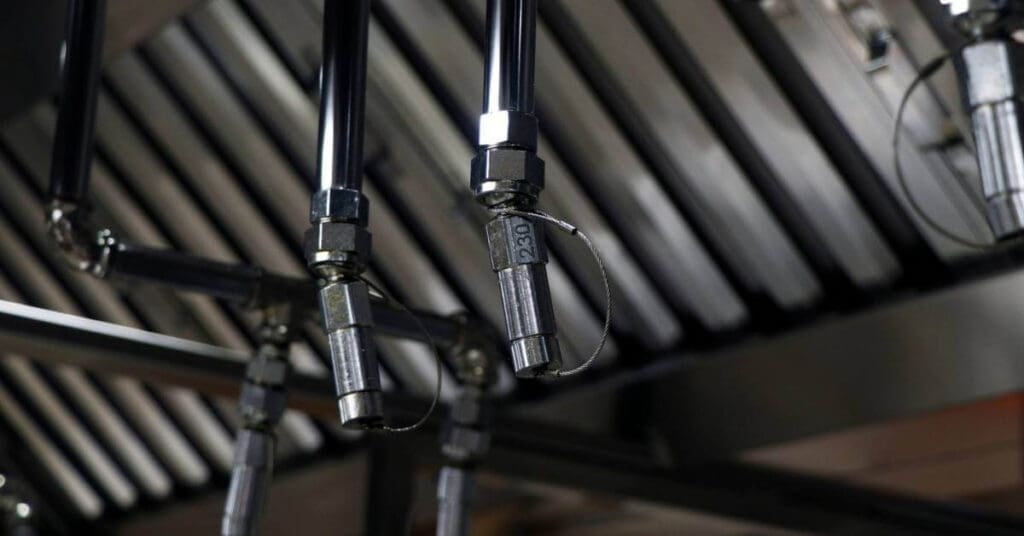
- Discharge nozzles – these are strategically positioned above fryers, grills, hobs, ranges, and inside ducting where the nozzles deliver the suppression agent directly to the source of the fire and to hidden areas where grease build-up presents an increased risk.
- Control and activation mechanism – the system’s control unit coordinates the response, triggering audible or visual alerts and activating automatic gas or electrical shut-off valves.
Together, these components create a fast, targeted, and highly effective fire suppression response designed specifically for the demands of commercial kitchen environments.
What are the benefits of an ANSUL fire suppression system for kitchens?
Installing an ANSUL fire suppression system delivers a wide range of operational, safety, and compliance benefits for commercial kitchens, including:
- Early detection and automatic activation – fires are identified and suppressed at the earliest possible stage, reducing the risk of injury to staff and limiting damage to equipment and the surrounding areas.
- Targeted suppression at the source – because the system discharges directly onto high-risk appliances and ducting, fires are contained quickly, often preventing the spread beyond the initial ignition point.
- Reduced downtime and faster recovery – the wet chemical agent is quick to clean and avoids the extensive water damage associated with sprinkler systems, allowing kitchens to resume operations sooner after an incident.
- Improved staff safety – ANSUL systems remove the need for staff to intervene in dangerous situations involving hot oil or gas appliances, significantly lowering the risk of injury.
- Stronger compliance and insurance confidence – automatic kitchen suppression systems are strongly recommended – and often required – by insurers in high-risk environments. Installing an ANSUL system demonstrates due diligence and supports compliance with fire safety legislation.
Key signs your kitchen needs an ANSUL fire suppression system upgrade
Even if your kitchen already has some form of fire protection in place, there are signs that may suggest you need to upgrade to an ANSUL fire suppression system, such as:
- You have an outdated suppression system that no longer meets current performance standards or is fully supported by manufacturers.
- There have been changes to your kitchen layout or equipment that could increase fire load and leave existing suppression coverage inadequate.
- You have increased operational demand like extended opening hours, higher output, or new cooking processes that could elevate the risk beyond your existing system.
- You’re relying on manual fire protection only and not automatic suppression required for high-risk kitchen environments.
Spotting these signs early allows commercial kitchen operators to take proactive steps to strengthen their fire protection and reduce the risk of serious incidents
Ready to protect your kitchen?
Commercial kitchen fires can have serious consequences, including injury, business interruption, potential reputational damage, and long-term financial loss. ANSUL fire suppression systems provide a proven, reliable solution designed specifically to address these risks.
At AFP Wales, we design, install, and maintain ANSUL kitchen fire suppression systems tailored to the unique layout and operational demands of your kitchen. Our accredited and fully qualified engineers ensure every system is installed to the highest standard and supported by ongoing maintenance to keep your protection reliable and compliant.
If you’re reviewing your kitchen fire safety strategy, planning a refurbishment, or you’re unsure whether your current system offers sufficient protection, now is the time to act. Get in touch with us today to discuss how an ANSUL system can help protect your people, property, and your business continuity.
ANSUL fire suppression system FAQs
- How does an ANSUL kitchen fire suppression system activate?
- An ANSUL kitchen fire suppression system activates automatically when the heat-sensitive detection lines installed above cooking appliances or within extraction systems reach a predetermined temperature. Once triggered, the system releases a wet chemical agent directly onto the fire source and simultaneously shuts off gas or electrical supplies to affected equipment, helping to suppress the fire quickly and prevent re-ignition.
- What type of fire does ANSUL target?
- ANSUL systems are specifically designed to tackle Class F fires, which involve cooking oils and fats commonly found in commercial kitchens. The wet chemical agent cools the fire and reacts with hot oils to form a soapy layer that smothers flames and prevents flare-ups, making it far more effective than water or powder-based suppression in kitchen environments.
- Does insurance require ANSUL?
- While ANSUL systems are not legally mandatory in every case, many insurers strongly recommend or require automatic kitchen fire suppression systems in high-risk commercial kitchens. Installing an ANSUL system demonstrates a proactive approach to fire risk management and can help meet insurer expectations, reduce premiums, and support claims in the event of a fire.
- Is ANSUL suitable for all commercial kitchens?
- ANSUL is suitable for the vast majority of commercial kitchens, including restaurants, hotels, schools, healthcare facilities, and large-scale catering operations. Because these systems are designed around the specific layout, equipment, and fire risks of each kitchen, they can be adapted to suit both small and high-volume environments, although a site assessment is always required to confirm suitability.
- Where are ANSUL fire suppression systems commonly used?
- ANSUL fire suppression systems are commonly installed in restaurants, hotel kitchens, takeaways, school and university catering facilities, healthcare kitchens, food production sites, and industrial catering environments. Any kitchen using high-temperature cooking equipment or large quantities of oil is likely to benefit from ANSUL protection.
- What are the legal and compliance considerations for ANSUL systems?
- ANSUL systems support compliance with the Regulatory Reform (Fire Safety) order 2005, which requires duty holders to take appropriate measures to reduce fire risk in the workplace. While the legislation doesn’t specify brand names, automatic suppression systems like ANSUL are widely recognised as best practice for high-risk kitchens and are often referenced in fire risk assessments, insurer requirements, and industry guidance.