
 01443 843 927
9 minute read

Why Fire Doors Are Essential For HMO Fire Safety




Fire doors are an essential part of protecting people, property and escape routes in commercial and managed buildings. When they are correctly installed and properly maintained, they help contain fire and smoke, support evacuation and reduce the risk of fire spreading through a building.
At Advanced Fire Protection, we provide compliant fire doors in Newport for businesses, landlords, managing agents, facilities teams and organisations across the area. From our base in South Wales, we support clients throughout Newport and the wider region with fire door surveys, installation, maintenance, repairs and replacement.
Our work is focused on helping you keep your fire doors effective, compliant and suitable for the way your building is used. Whether you are responsible for an office, retail premises, hospitality venue, healthcare facility, education site, industrial building or managed residential property, our team can provide clear advice and practical fire door support.
Fire doors are sometimes only thought about during inspections, refurbishments or after defects have been found. In reality, they should be managed as part of everyday building safety.
In busy commercial premises, fire doors are opened, closed, knocked, adjusted and used throughout the day. Over time, this regular use can affect how well they perform. A door that once closed correctly may become misaligned, seals can become damaged, hinges can loosen and signage can be removed or missed.
For Newport businesses and property managers, this means fire door management should include regular checks, clear records and prompt remedial action where defects are found. A fire door is only effective if the full door assembly is working as intended, including the door leaf, frame, hinges, seals, closer, glazing, signage and ironmongery.
AFP Wales supports businesses by assessing fire doors, identifying defects, recommending practical remedial works and providing the services needed to keep fire doors in effective working order. From initial surveys through to repairs, replacement and installation, we help you understand what needs attention and what action should be prioritised.
In the event of a fire, smoke and flames can spread quickly through corridors, stairwells, communal areas and service spaces. Fire doors help slow that spread, protecting escape routes and giving people more time to leave the building safely.
They are particularly important in buildings where people may be unfamiliar with the layout, where several businesses or occupants share the same space, or where higher-risk areas need to be separated from the rest of the building.
Effective fire doors can help to:
For businesses in Newport, keeping fire doors in good condition is a practical way to support compliance, protect building users and reduce avoidable risk.
Fire doors should be considered as part of a building’s wider fire safety duties. Under the Regulatory Reform (Fire Safety) Order 2005, the Responsible Person must ensure that suitable fire safety measures are in place and maintained where the Order applies.
In practice, this means that where fire doors protect escape routes, support compartmentation or separate higher-risk parts of a building, they must remain suitable and effective. A fire door that is damaged, poorly fitted, unable to close correctly or missing key components may not provide the level of protection required.
For multi-occupied residential buildings, the Fire Safety Act 2021 is also relevant. It clarified that fire risk assessments should consider the structure, external walls and flat entrance doors between domestic premises and common parts. This is important for landlords, housing providers and managing agents responsible for apartment blocks or mixed-use buildings.
Newport businesses and property teams should consider:
Fire door compliance is not just about having the right doors in place. It also depends on regular inspection, ongoing maintenance and clear evidence that issues have been identified and resolved.
Fire doors can develop problems gradually, especially in buildings with regular footfall, deliveries, shared access routes or heavy daily use. Some defects may appear minor at first, but they can affect how well the door performs in the event of a fire.
Common fire door issues include:
If these issues are not addressed, they can compromise escape routes, allow smoke to spread more quickly and weaken the building’s compartmentation strategy. Regular fire door surveys, maintenance and repairs help identify problems early and give duty holders a clear route to keeping fire doors effective.
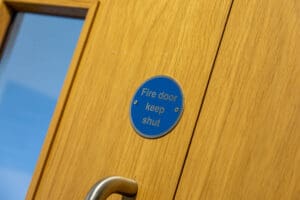
A fire door survey provides a clear understanding of the condition of your existing fire doors. It can help identify visible defects, compliance concerns and areas where remedial work may be required.
During a survey, we can assess the door leaf, frame, gaps, seals, hinges, closers, glazing, signage, alignment and visible damage. The findings can then be used to prioritise repairs, replacement or ongoing maintenance.
Fire door installation must be carried out correctly if the door is to perform as intended. AFP Wales provides professional fire door installation in Newport, helping commercial clients select and install suitable doors for their buildings.
We can support with FD30 and FD60 fire doors, glazed fire doors, flat entrance doors and internal fire doors for commercial and managed properties. Each installation is approached with the building’s use, fire strategy and compliance requirements in mind.
Fire doors need ongoing maintenance to remain effective. AFP Wales provides fire door maintenance and repair services in Newport for common issues such as worn seals, faulty closers, excessive gaps, damaged hinges, poor alignment, missing signage and general wear.
Where a repair is suitable, we can help restore the door to an effective working condition. If a door is too damaged, unsuitable or non-compliant to repair safely, we can advise on replacement.
Some fire doors reach a point where repair is no longer the right option. Replacement may be required where there is serious damage, missing certification, unsuitable glazing, distorted frames, repeated inspection failures or alterations that affect the door’s performance.
AFP Wales provides fire door replacement in Newport for commercial and managed properties. We can assess the existing door, recommend a suitable replacement and install the new fire door in line with the building’s requirements.
Choosing a competent fire door company is important. Fire doors need to be surveyed, installed, maintained and repaired by specialists who understand how each component contributes to the performance of the door assembly.
AFP Wales provides FIRAS Certification where applicable across our fire door services, giving clients confidence that work is completed with care, knowledge and compliance in mind.
Businesses in Newport choose AFP Wales because we offer:
If you need professional fire doors in Newport, AFP Wales can help. From surveys and installation to maintenance, repairs and replacement fire doors, we provide practical support for commercial buildings and managed properties.
Based in South Wales, our specialists work with clients across Newport and the wider region, helping them identify fire door issues, understand compliance requirements and take the right next steps.
Contact AFP Wales today to arrange a fire door survey, book in a fire door installation or request support for fire door maintenance, repairs or replacement in Newport.
If you need support with surveys, installation, maintenance, repairs or replacement in Newport, our team can help. Contact the team at AFP Wales today to discuss your requirements and arrange a fire door survey or site visit.






At Advanced Fire Protection, we are dedicated to helping safeguard both domestic and commercial properties through expert fire safety solutions that ensure you are compliant with Welsh fire safety regulations.